

Solutions / Lifecycle Management
LIFECYCLE MANAGEMENT
Take command of every asset from day one to done.
Every action runs on policy and logs itself, so the record stays current and the end-of-quarter scramble goes away.
Every stage of an asset's life runs by your rules, not by chance.
Today, what happens next depends on someone catching it, and the systems don’t talk. Oomnitza puts every move under policy, so each one follows the rules on its own and the record holds up.
TRUST
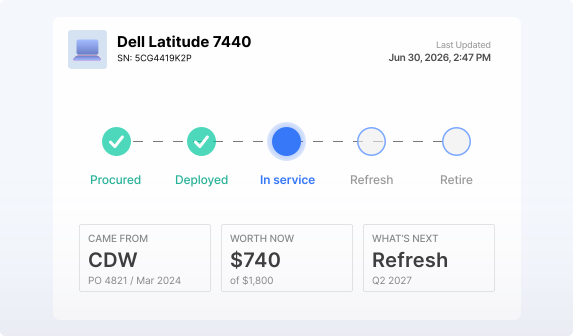
Know every asset's full story: where it came from, what it's worth, and what happens next.
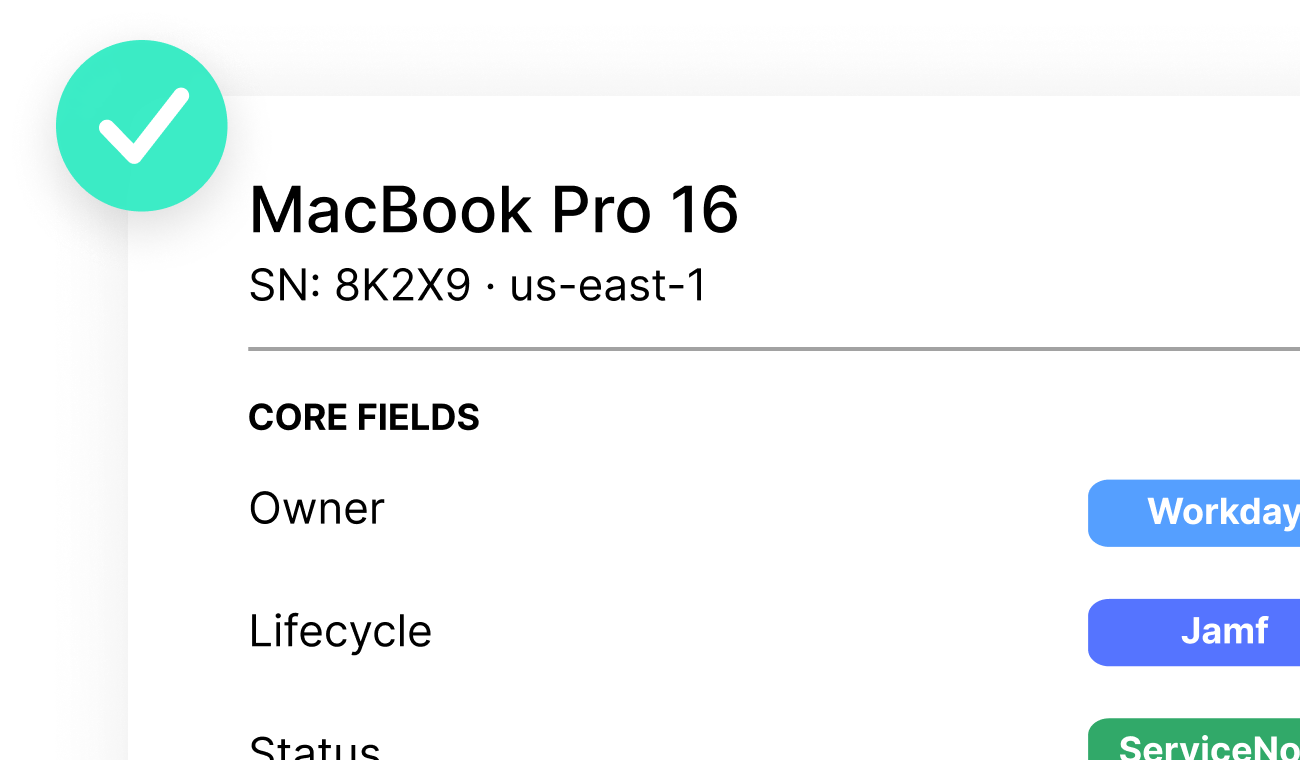
Procurement, IT, HR, finance, and ITSM all feed one record that updates itself as assets move. The story stays current without anyone manually maintaining it.
ACT
Fire the right action at every stage, from deployment to disposition.
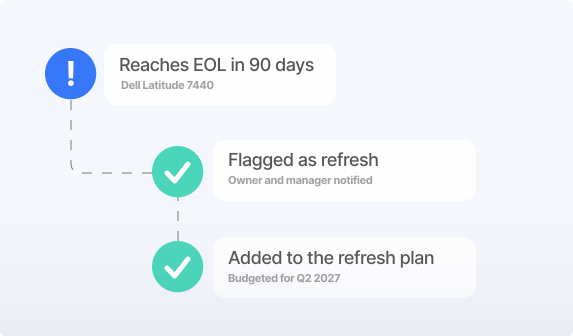
When an asset moves, the rest follows. Reclamation fires at offboarding. Refresh candidates surface ahead of EOL. Financial records close at disposition. Each step happens the moment it should, with no one chasing it.
LEAD
Plan every refresh, justify every budget, and answer every audit from defensible data.
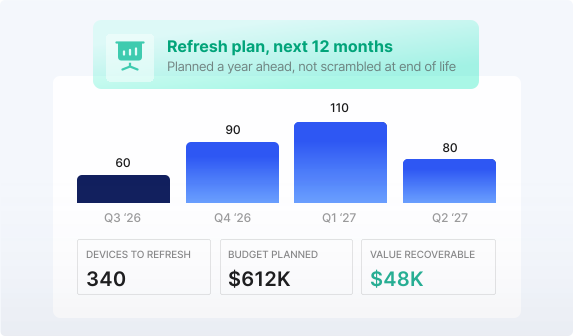
Refreshes get planned a year ahead, not scrambled at end of life. Budgets hold up in the room because the numbers are current. Audits that used to eat weeks get answered in minutes. And recoverable value gets caught before it’s written off.
PRODUCTS
The building blocks of continuous lifecycle governance.
Hardware Asset
Management

Govern every hardware asset from
forecast to end-of-life.
A continuous record runs from purchase order through retirement, updating ownership and cost center at every reassignment, while EOL and warranty signals surface refresh candidates before they turn into incidents.
Data Integrity
Engine
Power every downstream system
with trusted asset data.
Asset records from every connected source are reconciled and enriched with lifecycle context, so the accuracy downstream systems depend on holds as the environment changes.
Software Asset
Management

Maintain a trusted license position
through every lifecycle change.
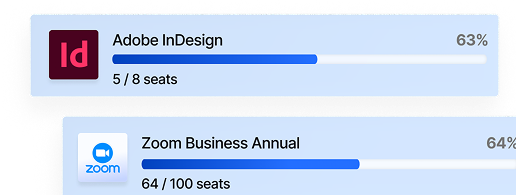
License allocations update automatically at onboarding, transfer, and offboarding, renewals surface with verified usage so negotiations start from facts, and unused licenses return to the pool the day someone leaves
Automations &
Workflows
Trigger the right action the
moment an asset changes state.
Onboarding, transfer, offboarding, and disposal each launch governed workflows without manual coordination, policy checks run at every step, and each action is timestamped into the asset’s permanent record.
CUSTOMER STORY
One System of Truth for 60,000 assets across 1,000 locations.
![]() |
|
| “The biggest benefit is understanding assets from purchase all the way to decommissioning. Now, we’re able to accurately predict what we need to refresh and renew next year and even plan 5 years down the line.”
– Nemi George, Vice President, Information Security Officer & IT Operations
|
|
25%Cost savings managing the lifecycle of all assets |
160 hoursSaved per month from improved service delivery and experience |
| READ FULL STORY | |
INTEGRATIONS
Build every lifecycle from a connected ecosystem.
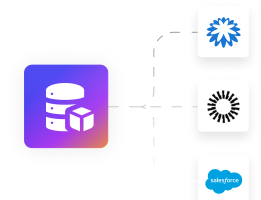
Procurement, MDM, HR, ITSM, and finance each own a different stage of the lifecycle. Oomnitza connects them so every transition is captured and visible in one place.
Keep Exploring
Frequently Asked Questions
What is IT asset lifecycle management?
IT asset lifecycle governance is the practice of maintaining a continuously current, governed record for every technology asset from procurement through disposition. It ensures every transition produces accurate data for the next stage so financial records, operational decisions, and compliance evidence always reflect what is actually happening in the environment.
Why do most organizations struggle with asset lifecycle management?
Most organizations track assets at two points: when they are purchased and when they are disposed of. Everything in between, including reassignments, location changes, refresh decisions, and offboarding, happens in disconnected systems that rarely update a central record. The result is financial data that diverges from operational reality, refresh cycles that start too late, and reclamation opportunities that are never captured.
How does Oomnitza govern the full asset lifecycle?
Oomnitza connects to every system that generates lifecycle data including MDM, ITSM, HR, procurement, and finance, and maintains a single reconciled asset record that updates as the environment changes. Lifecycle rules trigger workflows at key transitions: deployment assigns ownership, offboarding triggers device return and reclamation, EOL detection queues refresh planning, and disposition closes the financial record.
How does lifecycle governance improve financial reporting and depreciation accuracy?
Oomnitza connects lifecycle events directly to financial records so depreciation reflects operational truth rather than calendar assumptions. When an asset is disposed of, reassigned, or written down, the financial record updates at the time of the event. This eliminates ghost assets on the balance sheet, reduces property tax exposure, and gives finance a defensible record for audits and M&A due diligence.
How does Oomnitza support hardware refresh planning and EOL management?
Oomnitza continuously tracks device age, warranty status, and manufacturer end-of-life dates. As assets approach EOL thresholds, they surface in refresh queues with full lifecycle context including current owner, cost center, and available replacement candidates. Procurement sees what to buy and what to reclaim before raising a purchase order. Refresh cycles become planned rather than reactive.
How is lifecycle governance different from asset tracking?
Asset tracking tells you where something is and who has it. Lifecycle governance tells you where it has been, what it has cost at each stage, when it needs action, and what should happen to it next. Tracking produces a point-in-time snapshot. Governance produces a continuously maintained history that drives decisions, triggers workflows, and closes financials accurately.
How does Oomnitza handle device reclamation when employees leave?
When an employee offboards, Oomnitza detects the HR event and automatically triggers a return workflow, scheduling device retrieval, revoking software access, and reclaiming licenses. The device re-enters the available pool with full lifecycle context. This replaces a manual coordination process that typically leaves devices and licenses unreclaimed for weeks or months after departure.
How does Oomnitza support M&A asset integration?
During M&A activity, Oomnitza provides immediate visibility into the acquired environment including what assets exist, who owns them, what lifecycle state they are in, and what their financial treatment should be. Governed handoff workflows ensure assets from the acquired organization enter the correct ownership and cost center structures without manual reconciliation.
How long does it take to get full lifecycle visibility with Oomnitza?
Most organizations see a reconciled, continuously current asset record within weeks of connecting their primary data sources. The initial reconciliation typically surfaces lifecycle gaps including ghost assets, unreclaimed devices, and EOL equipment that have been accumulating undetected. Accuracy then maintains continuously rather than degrading between cleanup cycles.
What integrations does Oomnitza need to govern the full asset lifecycle?
Oomnitza connects to the systems that generate lifecycle data at each stage: MDM tools like Jamf and Intune for deployment and device state, ITSM platforms like ServiceNow for incident and change context, HR systems like Workday and BambooHR for offboarding events, procurement tools like Coupa and Ariba for purchase records, and financial systems like NetSuite and SAP for depreciation and cost allocation. Oomnitza has over 1,500 connectors and does not require agent deployment.
Ready to put your data to work?
Reach out to see what’s possible.