Solutions / Security & Risk Management
SECURITY & RISK MANAGEMENT
Turn security exposure into verified coverage.
Operate on asset data that stays accurate as fast as your environment changes it.
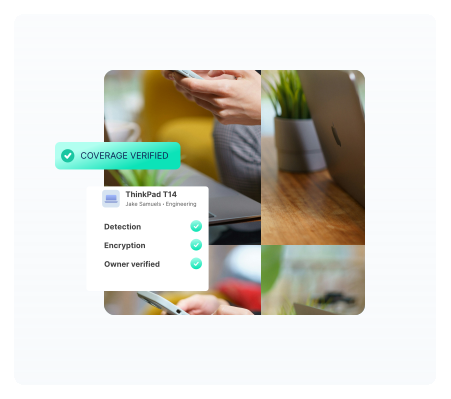
Verified coverage starts one layer below the security stack.
Hardware sits in one set of systems, software and access in another, and exposure collects between them. Oomnitza reconciles all three, routes each gap to the team that can close it, and keeps the count moving down.
TRUST
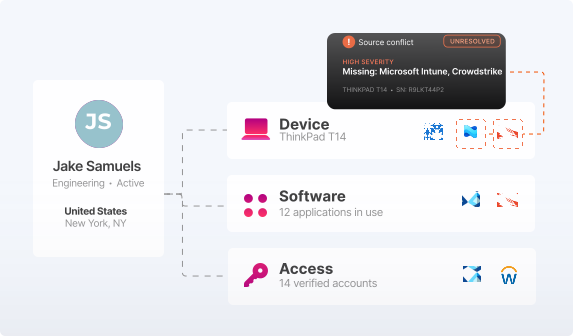
Trace one person across every device and account they hold.
A finding tells you what’s wrong. It doesn’t tell you who owns the device or what state it’s in. Oomnitza supplies that from a verified record, so every exposure arrives ready to act on.
ACT
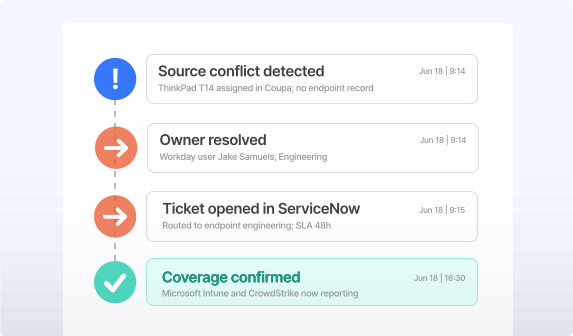
Put the asset record to work in the systems that own the fix.
A flagged device, an unapproved application, or a departure each trigger the workflow that fits, running the actions and writing results back to the systems your teams already use.
LEAD
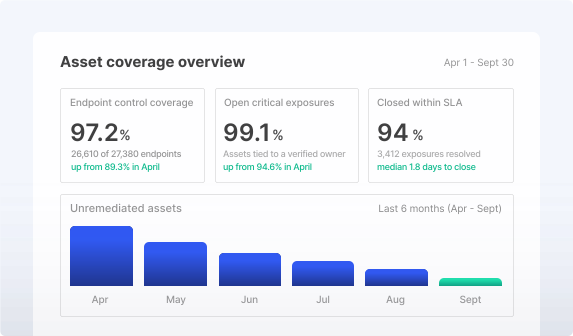
Show exposure going down and staying down.
Security stops chasing ghosts and starts closing real gaps, and leadership answers exposure, ownership, and remediation questions from evidence instead of estimates.
RELATED BUSINESS CHALLENGES
Close findings, secure transitions, and keep ownership
current across the estate.
|
|

Asset Visibility & OwnershipTie a verified owner and current status to hardware wherever it sits, on or off the network, so a flagged device is never an investigation.. |
| EXPLORE THE SOLUTION | EXPLORE THE SOLUTION |
|
|
|
| EXPLORE THE SOLUTION | EXPLORE THE SOLUTION |


CUSTOMER STORY
Devices locked on departure, evidence ready on request.
 |
|
| “We wouldn’t be able to stay the same size team if we didn’t have Oomnitza. We would probably need someone solely managing assets and shipping stuff out, so there’s a massive impact from [everything happening automatically].”
– Fiona McShane, Senior Automation Engineer
|
|
98%+Asset data accuracy, supporting SOC 2 audit readiness |
97%Reduction in time spent for new hire onboarding process |
| READ FULL STORY | |
PRODUCTS
Fortify your security program with trusted asset intelligence.
Hardware Asset
Management
Hold chain of custody from
purchase through disposal.
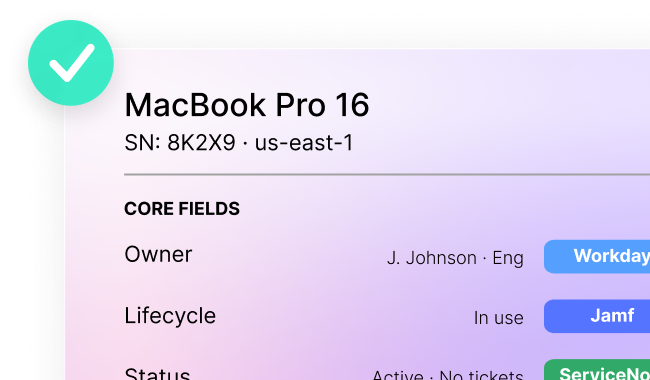
Track each device from purchase to disposal with its owner and lifecycle state attached, so hardware exposure never depends on someone remembering who had it.
Data Integrity
Engine
Resolve asset data conflicts before
your security tools inherit them.
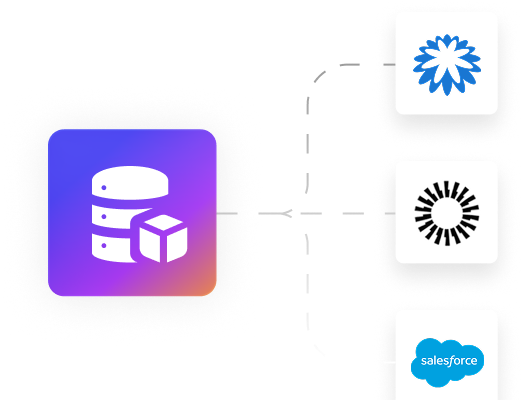
Rules you set determine which source is authoritative for each field, so the asset data reaching your security stack is correct before it arrives.
Software Asset
Management
Catch unsanctioned apps and
orphaned accounts.
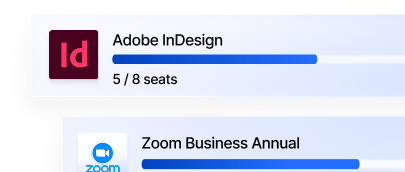
Discovered applications match against your catalogue and your entitlements, so unsanctioned software and dormant access surface with an owner attached rather than as a list.
Workflow
Builder
Revoke access and recover devices
on the same trigger.
Triggers fire on HR events, lifecycle dates, and detected anomalies, running actions across your connected systems and writing results back to the service desk.
INTEGRATIONS
Connect the tools that surface risk
to the record that governs it.
Endpoint, identity, HR, and security each know something different about the same asset. Oomnitza reconciles what they know into one verified record.







Keep Exploring

Table of ContentsJTVCYmxvZ190b2MlNUQ=KEY TAKEAWAYS The IT asset management lifecycle has 11 stages. Most programs actively govern only three: use + monitoring, security, and maintenance. Asset data degrades at every system…
Table of ContentsJTVCYmxvZ190b2MlNUQ=KEY TAKEAWAYS Software and hardware asset management is one record of what the enterprise owns, runs, and pays for. Splitting it creates a gap at every question that…
Frequently Asked Questions
What is asset visibility and ownership in IT asset management?
Asset visibility means knowing what technology assets exist in your environment. Asset ownership means knowing who is accountable for each one. Most organizations have visibility into what exists but lack verified ownership context, which is why security findings stall, financial decisions are made on incomplete data, and operational questions require manual investigation to answer.
Why do so many organizations have unowned assets in their inventory?
Ownership gaps accumulate because asset records are not automatically updated when circumstances change. Employees leave, transfer, or change roles without triggering ownership updates. Devices are deployed without formal intake. Software is procured outside IT. Each event creates an asset without a current, verified owner. Without a system that detects and routes these gaps automatically, unowned assets accumulate silently until something forces an audit.
How does Oomnitza establish and maintain verified asset ownership?
Oomnitza connects to HR, identity, MDM, ITSM, and procurement systems and reconciles what each one says about asset ownership continuously. When an employee leaves or changes roles, Oomnitza detects the event and updates ownership records automatically. When a new device is deployed, Oomnitza triggers an intake workflow that assigns an owner before the asset becomes active.
How does asset ownership improve security posture?
Security findings can only be actioned when there is a verified owner to route them to. When a CAASM or vulnerability management tool surfaces a coverage gap or out-of-policy device, Oomnitza provides the ownership context needed to create an assigned remediation workflow rather than an unresolved alert. Security teams stop seeing the same findings month after month because findings now route to people rather than queues.
What is the difference between asset discovery and asset visibility?
Asset discovery tells you what devices and software exist at a point in time. Asset visibility tells you what exists, who owns it, what its lifecycle state is, what it costs, what it connects to, and whether it is in compliance. Continuously. Discovery is the starting point. Visibility is the governed, continuously current state that makes every decision about the asset defensible.
How does Oomnitza handle unmanaged and unknown devices?
When Oomnitza detects a device with no ownership record, not enrolled in MDM, or absent from procurement data, it places the device in a governed unassigned state and triggers an ownership inquiry workflow. The device is held pending investigation with the finding routed to the appropriate team for determination and disposition.
How does Oomnitza surface and manage shadow IT?
Oomnitza scans purchase orders, invoices, and expense reports against a library of known software signatures to identify applications being paid for but absent from the managed software inventory. Shadow IT findings are routed to the appropriate owner for review and either brought under management or flagged for removal.
How does complete asset ownership support financial accuracy?
When every asset has a verified owner and current lifecycle state, financial records stay aligned with operational reality. Depreciation reflects actual asset status. Cost center allocations update when assets change hands. Retired assets close financially at disposition rather than persisting on the balance sheet. The result is more accurate technology spend reporting and procurement decisions grounded in what is actually available.
How long does it take to establish complete asset visibility with Oomnitza?
Most organizations see a continuously current, ownership-enriched asset record within weeks of connecting their primary data sources. The initial reconciliation typically surfaces existing gaps including unowned assets, ghost records, and shadow IT that have been accumulating without detection. Accuracy then maintains continuously rather than degrading between cleanup cycles.
What integrations does Oomnitza need to establish complete asset visibility?
Oomnitza connects to endpoint management tools like Jamf and Intune for device state, identity providers like Okta and Microsoft Entra ID for ownership verification, ITSM platforms like ServiceNow for operational context, HR systems like Workday and BambooHR for workforce changes, and procurement tools like Coupa and Ariba for purchase records. Oomnitza has over 1,500 connectors and does not require agent deployment.
Ready to put your data to work?
Reach out to see what’s possible.