
Solutions / Audit Readiness

AUDIT READINESS

Turn audits into business as usual.

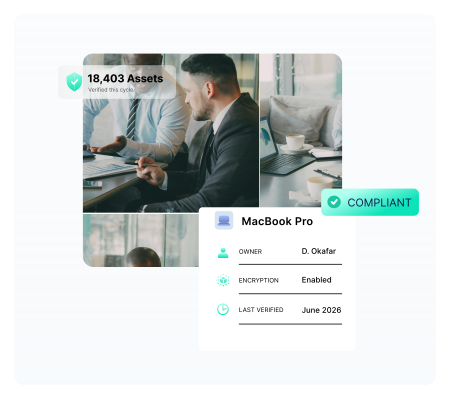
Keep asset data accurate, ownership clear, and controls enforced so every audit cycle runs on evidence that already exists.

Audit readiness is a byproduct of high-fidelity asset data and governance.

Oomnitza governs every asset transition continuously so when an auditor asks, your team retrieves, not rebuilds.

TRUST

Capture evidence the moment it happens, not the moment someone asks for it.

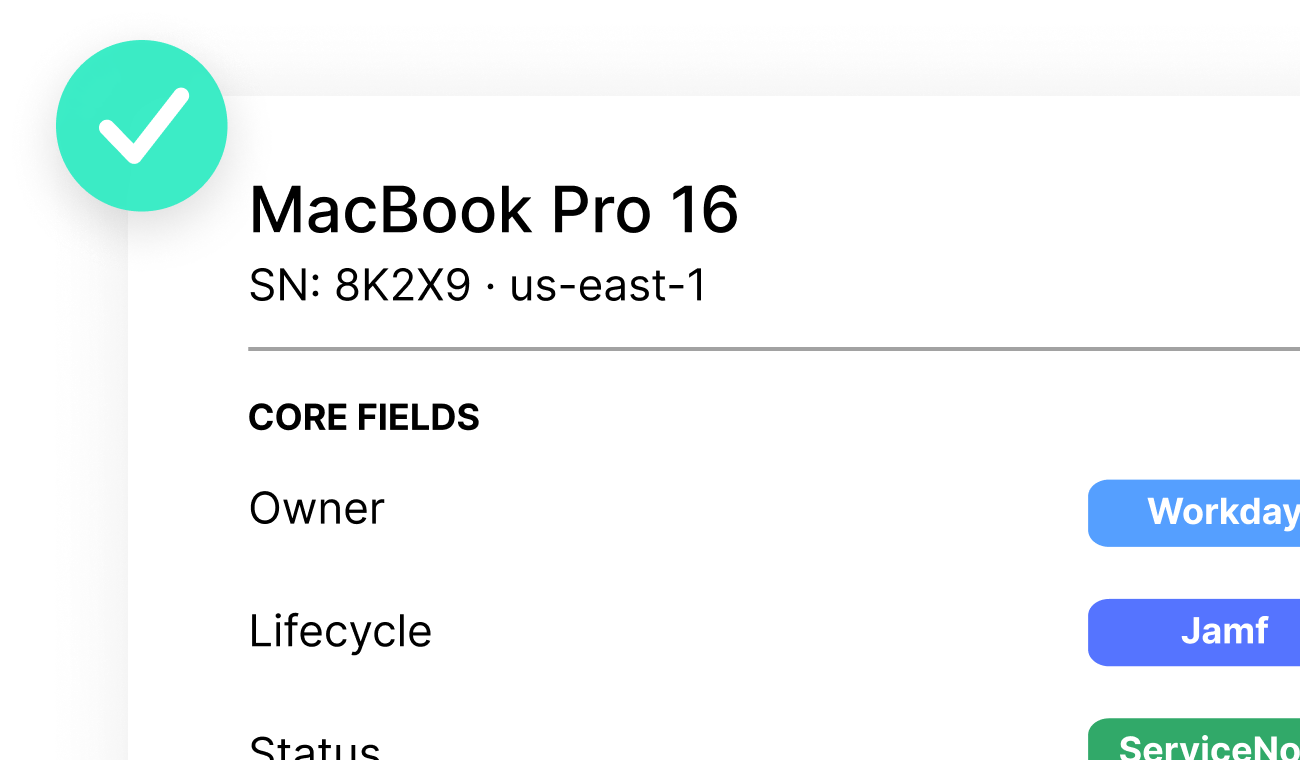
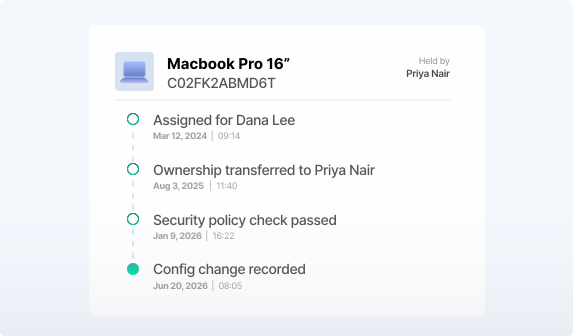
Every ownership transfer, policy check, lifecycle transition, and exception is logged at the time of the event, not reconstructed before a deadline. The record is always current because the governance never stops.

ACT

Turn every asset transition into a timestamped, defensible audit record.

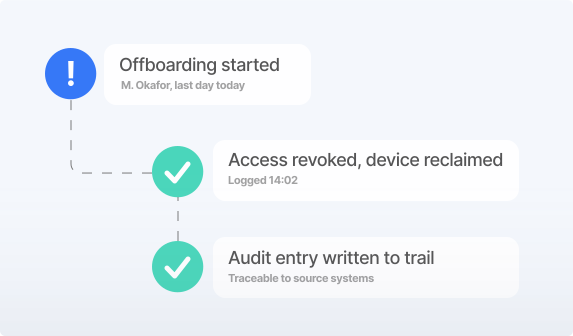
Policy enforcement, offboarding, reclamation, and exception handling all run from the governed asset record. Each action produces a timestamped, defensible trail without anyone setting up a compliance project.

LEAD

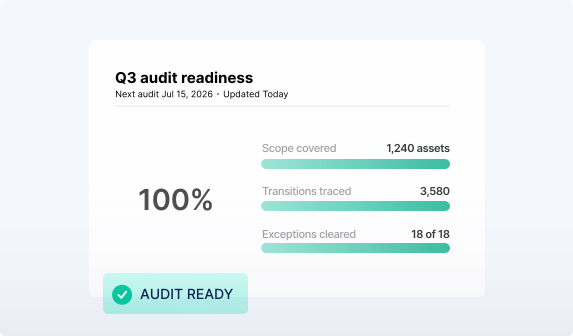
Walk into any audit knowing the evidence is already there.

When evidence accumulates as a byproduct of daily operations, audit preparation becomes retrieval, not reconstruction. The people who run the process stop dreading the calendar and start owning it.

PRODUCTS

Your complete toolkit for continuous audit readiness.

CUSTOMER STORY

Continuous audit readiness, delivered without adding a single hire.

docker logo
“We wouldn’t be able to stay the same size team if we didn’t have Oomnitza. We would probably need someone solely managing assets and shipping stuff out, so there’s a massive impact from [everything happening automatically].”

– Fiona McShane, Senior Automation Engineer

98%+

Asset data accuracy, supporting SOC 2 audit readiness

97%

Reduction in time spent for new hire onboarding process

READ FULL STORY  

INTEGRATIONS

Connect every system your audit evidence lives in.

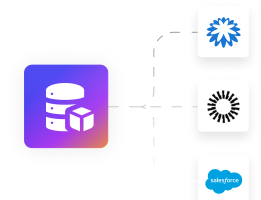
Endpoint, identity, ITSM, HR, and procurement each hold a piece of your compliance evidence. Oomnitza connects them so every governed asset event becomes part of a continuous audit record automatically.

Integration Logos Integration Logos Integration Logos Integration Logos

Keep Exploring

IT Asset Management: What It Actually Takes to Govern Technology Assets at Enterprise Scale

| Blog | No Comments
Table of ContentsJTVCYmxvZ190b2MlNUQ=KEY TAKEAWAYS1. Most enterprise ITAM programs treat asset management as an inventory problem when it is actually a data quality and governance problem. Only 35.9% of organizations report…

Enterprise Asset Management Bad Data: Why Your ITAM Records Are Wrong and How to Fix It

| Blog | No Comments
Table of ContentsJTVCYmxvZ190b2MlNUQ=KEY TAKEAWAYS 1. Bad asset data is an architecture problem, not an effort problem. The systems enterprises rely on (MDM, CMDB, HRIS, procurement, cloud) each capture one slice…

Frequently Asked Questions

What is audit readiness in IT asset management?

Audit readiness in IT asset management means maintaining continuously current, reconciled, and traceable asset records so that evidence can be retrieved on demand rather than assembled manually before each review. Organizations with mature audit readiness can respond to any audit request: hardware inventory, software entitlement, policy compliance, and chain of custody without triggering a preparation project.

How does Oomnitza automate audit evidence collection?

Oomnitza governs hardware and software assets continuously across their full lifecycle. Every ownership transfer, policy exception, license change, and lifecycle event is logged and timestamped as it occurs. Policy adherence is monitored against configured compliance frameworks in real time. When an audit request arrives, evidence is retrieved from records that already exist, not assembled from disconnected exports.

How is continuous audit readiness different from periodic audit preparation?

Periodic audit preparation treats evidence collection as a project triggered before a review. It requires weeks of manual reconciliation across disconnected systems and produces records that reflect what teams could find, not necessarily what happened. Continuous audit readiness is a posture maintained through daily lifecycle governance. Evidence accumulates as a byproduct of normal operations so preparation becomes retrieval, not reconstruction.

How long does it take to get audit-ready with Oomnitza?

Time to audit readiness depends on the size and complexity of the environment, but most organizations begin seeing reconciled asset records within weeks of deployment. Oomnitza connects to existing systems without deploying additional discovery agents, which accelerates time to value. One government customer reduced audit preparation from three months to minutes after implementation.

Does Oomnitza support SOC 2, ISO 27001, HIPAA, FedRAMP, and NIST audit evidence?

Yes. Oomnitza supports continuous policy monitoring and evidence compilation against SOC 2, ISO 27001, HIPAA, FedRAMP, NIST, and other regulatory frameworks. Asset records, ownership history, policy exceptions, and lifecycle events are structured and queryable so evidence can be mapped directly to specific control requirements on demand.

What types of audits does Oomnitza support: hardware, software, or both?

Oomnitza supports audit readiness across both hardware and software asset lifecycles. For hardware, it maintains chain-of-custody records, ownership history, and policy compliance evidence across every device. For software, it reconciles entitlements, deployments, and usage to support license compliance audits from regulators and vendors alike. The two are governed from the same platform so evidence across both surfaces from a single governed record.

How does Oomnitza maintain chain of custody across hardware asset transfers?

Every hardware asset transfer in Oomnitza generates a timestamped record: who held the asset, who received it, when the transfer occurred, and what the asset’s policy and configuration state was at that moment. These records accumulate continuously across the full lifecycle from procurement through disposition, creating an unbroken chain of custody that survives personnel changes, system migrations, and audit cycles.

How does CMDB data quality affect audit outcomes?

Most compliance audits require accurate configuration and ownership data from the CMDB to validate that controls were applied to the right assets at the right time. When CMDB records are stale, conflicted, or incomplete, auditors find gaps between what the CMDB claims and what actually exists in the environment. Oomnitza governs asset data upstream of the CMDB so the records feeding it are accurate before they arrive, improving audit defensibility across every downstream system.

Does Oomnitza support audit evidence for M&A due diligence?

Yes. M&A due diligence requires accurate, defensible records of technology assets, software entitlements, ownership, and lifecycle state across both the acquiring and acquired organizations. Oomnitza provides a continuously governed asset record that can be queried and exported for due diligence purposes. Organizations that run Oomnitza prior to M&A activity can produce asset evidence on demand rather than running a manual inventory project under deal timeline pressure.

How is Oomnitza different from compliance management tools like ServiceNow GRC or Archer?

Compliance management tools track controls and map evidence to frameworks but they depend on accurate asset data being fed to them from upstream systems. When that upstream data is stale, incomplete, or conflicted, the compliance tool inherits those gaps. Oomnitza governs the asset layer that feeds those tools. Organizations running both get compliance management built on asset data they can actually defend.

Ready to put your data to work?

Reach out to see what’s possible.