

Solutions / CMDB Accuracy

CMDB ACCURACY

Make your CMDB the most trusted system in your stack.

Resolve incidents faster, plan changes with confidence, and give security the asset context it needs to act.

CMDB accuracy is enforced upstream or repaired forever.

Oomnitza reconciles every data source automatically so your CMDB inherits accuracy instead of accumulating drift.

TRUST

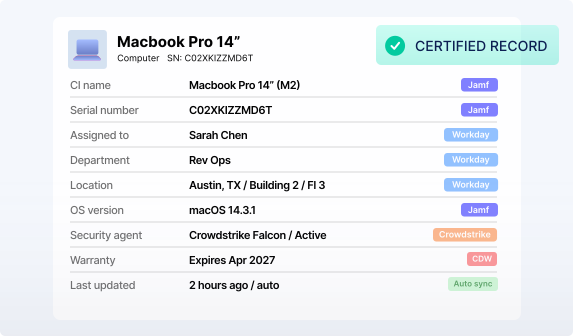
Resolve every source conflict before a single record reaches your CMDB.

Oomnitza connects every source, resolves the conflicts, and keeps the records current. What used to require a cleanup project becomes a continuous state.

ACT

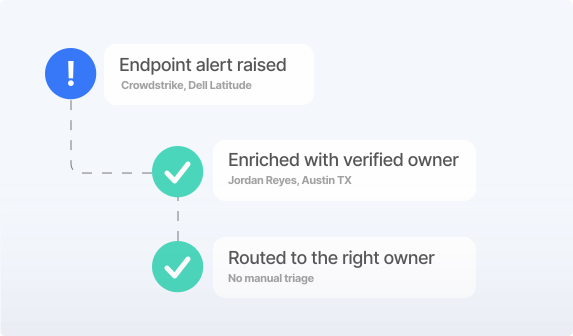
Route every incident, change, and security finding to the right owner with verified asset context automatically.

When the CMDB reflects reality, every team depending on it stops compensating for data they cannot trust and starts acting on data they can.

LEAD

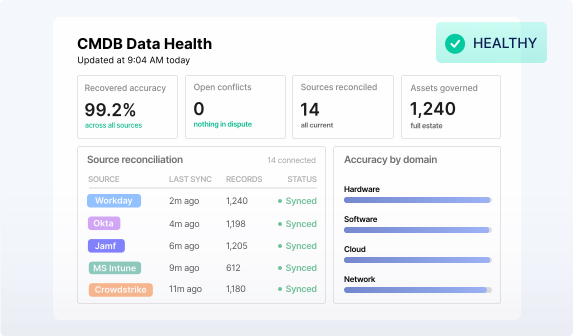
Equip every downstream team with defensible IT data.

When the data question stops coming up, the organization moves faster. Decisions get made. Changes get planned. Risks get managed without debate about whether the records are right.

PRODUCTS

Everything your team needs to ensure CMDB accuracy across the IT ecosystem.

Hardware Asset
Management

Ground the CMDB in device
records that match reality.

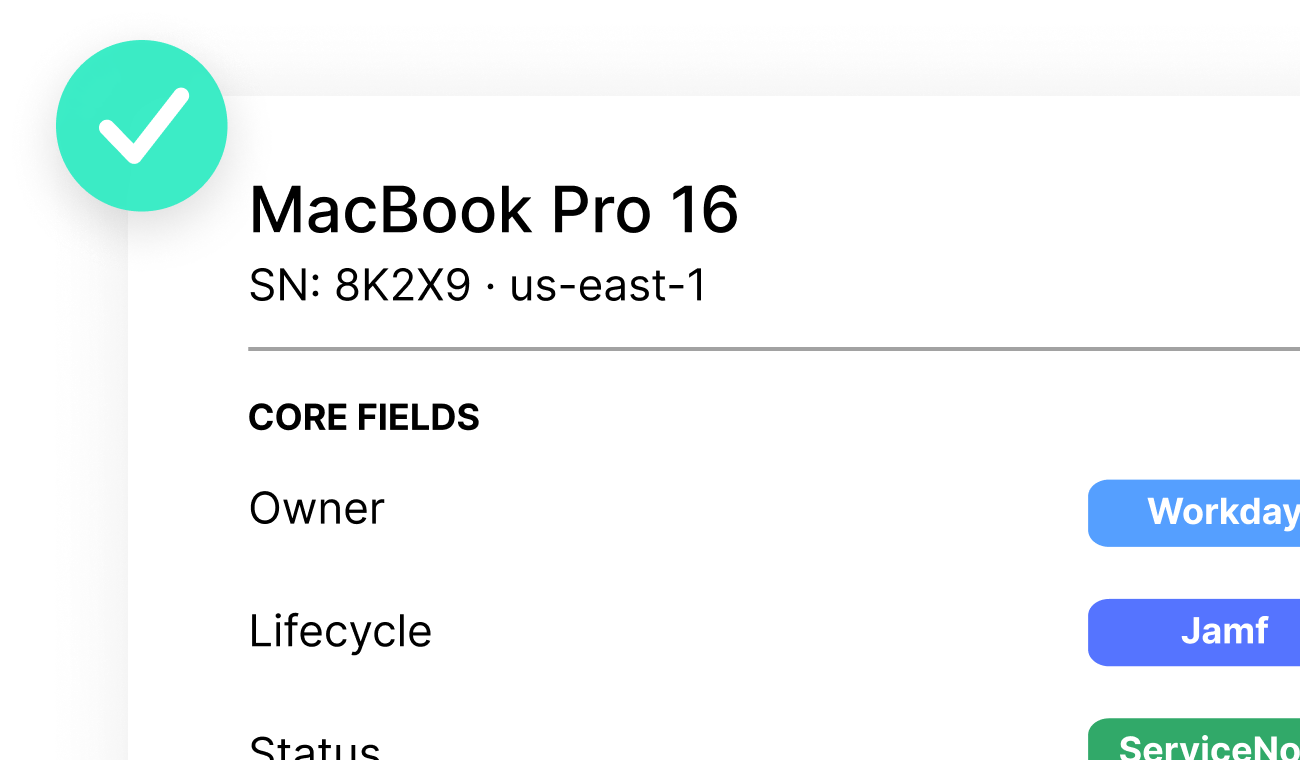
Device data from MDM, EDR, ITSM, and procurement reconciles into records that keep each device’s owner, location, and lifecycle state accurate, with ghost assets flagged before they skew your reports

See Hardware Asset Management 
Data Integrity
Engine

Build the accurate asset foundation
your CMDB draws from.

Every authoritative source is normalized, deduplicated, and enriched into reconciled records, so the CMDB inherits accuracy instead of the conflicts between its sources.

Software Asset
Management

Close the software blind spot in
your CMDB.

Entitlements, deployments, and usage reconcile across installed software and SaaS, feeding the CMDB accurate software records and surfacing the unsanctioned tools it never knew about.

See Software Asset Management 

Automations &
Workflows

Hold accuracy steady as your
environment changes.

Lifecycle rules fire at every intake, transfer, and retirement, updating the affected records automatically, so the CMDB stays current between reviews instead of decaying the moment a cleanup ends.

CUSTOMER STORY

Fragmented asset data became one accurate System of Truth.

CHG Healthcare logo
“Oomnitza has enabled our team to track assets and software, while also providing the crucial link to our ticketing system that was missing.”

– Chris Snyder, Desktop Engineer, IT

$712,500

Saved by recovering off-boarded employee devices

$0 spent

On new laptops in 2025 – budget redirected to AI

READ FULL STORY  

INTEGRATIONS

Every source your CMDB depends on, connected and continuously reconciled.

MDM, EDR, identity, and procurement each hold a different version of the same asset. Oomnitza reconciles them upstream so your CMDB inherits accuracy instead of conflict.

Integration Logos Integration Logos Integration Logos Integration Logos

Keep Exploring

IT Asset Management: What It Actually Takes to Govern Technology Assets at Enterprise Scale

| Blog | No Comments
Table of ContentsJTVCYmxvZ190b2MlNUQ=KEY TAKEAWAYS1. Most enterprise ITAM programs treat asset management as an inventory problem when it is actually a data quality and governance problem. Only 35.9% of organizations report…

Enterprise Asset Management Bad Data: Why Your ITAM Records Are Wrong and How to Fix It

| Blog | No Comments
Table of ContentsJTVCYmxvZ190b2MlNUQ=KEY TAKEAWAYS 1. Bad asset data is an architecture problem, not an effort problem. The systems enterprises rely on (MDM, CMDB, HRIS, procurement, cloud) each capture one slice…

Frequently Asked Questions

What is CMDB accuracy and why is it so hard to maintain?

CMDB accuracy means the configuration management database reflects operational reality: current ownership, correct lifecycle states, valid relationships, and no duplicate or ghost records. It is hard to maintain because the CMDB depends on data from many upstream systems including MDM, procurement, identity, and ITSM that each hold a different version of the same asset. Without a reconciliation layer upstream, the CMDB inherits every conflict and gap from those sources rather than resolving them.

Why do CMDB cleanup projects keep failing?

Cleanup projects remove existing errors but do nothing to prevent new ones from arriving. Every new deployment, reassignment, or retirement that goes unrecorded upstream creates a new gap. The CMDB begins drifting again the moment the project ends. Sustained accuracy requires solving the upstream data quality problem, not repeatedly correcting its downstream effects.

How does Oomnitza improve CMDB data quality?

Oomnitza connects to every system that generates authoritative data about the same assets including MDM, EDR, procurement, identity, ITSM, and cloud, and normalizes, deduplicates, and enriches that data into a continuously reconciled asset record. That verified record feeds the CMDB continuously. The CMDB stops accumulating errors because the source it draws from is accurate.

How does Oomnitza handle duplicate and conflicting records from multiple discovery sources?

Oomnitza applies a governed asset model to resolve conflicts across sources. When MDM, EDR, and ITSM disagree about the same device, Oomnitza determines the authoritative value based on source hierarchy, recency, and lifecycle context. The resolved record feeds the CMDB rather than passing the conflict downstream for someone to resolve manually.

How is Oomnitza different from working inside a CMDB to clean the data?

Working inside a CMDB removes existing errors but does nothing to prevent new ones from arriving. Oomnitza solves the upstream problem by building a validated asset model from authoritative sources that makes accuracy a continuous state rather than something you restore periodically. One customer improved CMDB accuracy from 40% to 92% without changing the CMDB itself.

How does Oomnitza complement ServiceNow CMDB rather than replacing it?

ServiceNow CMDB manages configuration items, relationships, and ITSM workflows. Oomnitza governs the asset lifecycle data that feeds it. Organizations running both get CMDB and ITSM workflows built on asset data they can trust. Oomnitza integrates bidirectionally with ServiceNow, feeding enriched asset data in and consuming CMDB relationship data to enrich its own lifecycle model.

How long does it take to improve CMDB accuracy with Oomnitza?

Most organizations see measurable accuracy improvements within weeks of connecting their primary data sources. Oomnitza’s agentless connectors integrate with existing systems without infrastructure changes. The initial reconciliation typically surfaces duplicate, stale, and orphaned records immediately. Accuracy then maintains continuously rather than degrading between cleanup cycles.

Does Oomnitza require agent deployment or infrastructure changes?

No. Oomnitza uses agentless connectors to integrate with existing systems including MDM, EDR, identity, ITSM, procurement, and cloud platforms, without deploying additional infrastructure. Most organizations complete initial integrations and begin seeing reconciled asset records within days of starting deployment.

Does Oomnitza work with ServiceNow CMDB and Jira Service Management?

Yes. Oomnitza integrates bidirectionally with ServiceNow CMDB, Jira Service Management, and other major ITSM platforms. Oomnitza feeds enriched, reconciled asset data into the CMDB to improve accuracy and can pull CMDB relationship and service data to enrich its own lifecycle model. Organizations using ServiceNow do not need to replace it. Oomnitza improves the accuracy of the data it works with.

How does CMDB accuracy affect security posture and risk management?

Security tools that depend on CMDB data for asset context including CAASM, SIEM, and vulnerability management platforms can only prioritize and route findings accurately when ownership, lifecycle state, and business context are correct. When CMDB records are stale or conflicted, security findings route to wrong owners, EOL devices look the same as supported ones, and risk prioritization becomes unreliable. Accurate CMDB data makes security tooling more effective without changing the tools themselves.

Ready to put your data to work?

Reach out to see what’s possible.