CMDB Data Quality: Why Cleanup Projects Fail and What Continuous Reconciliation Actually Achieves
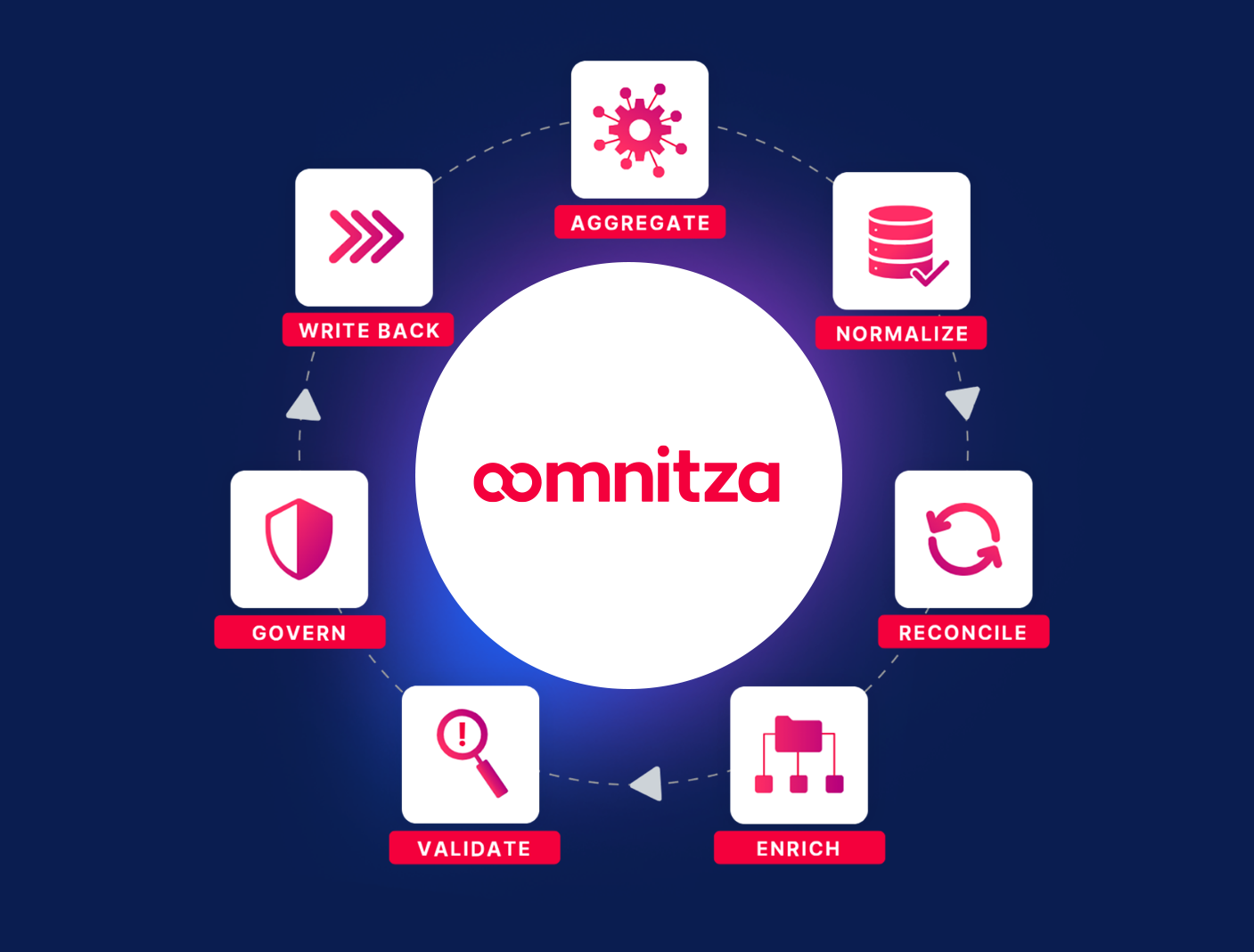
Table of Contents
KEY TAKEAWAYS
- CMDB data quality has four dimensions, and most teams only measure one. Accuracy gets all the attention, while completeness, currency, and consistency stay invisible until something breaks downstream.
- A reactive, ticket-and-scan architecture guarantees degradation the moment a cleanup project ends. No team can out-work that structurally.
- No single system holds the truth. Each team knows their piece of information. A CMDB that doesn’t reconcile all of them continuously leaves you guessing at completeness.
- Continuous reconciliation is a different architecture, not a faster scan. It ingests every authoritative source the moment something changes, instead of waiting for a ticket or the next scheduled discovery run, creating a System of Trust.
- CMDB data quality is now an AI readiness problem. Autonomous workflows and agents inherit whatever your CMDB believes, so automation only amplifies bad data.
Roughly 8 in 10 configuration management database (CMDB) projects fail to deliver the value they were funded for. Meanwhile, your average CMDB only holds an accuracy level of about 40 to 70%.
Those numbers describe the same problem from two angles. Maintaining CMDB data quality is a discipline that requires keeping configuration records accurate, complete, current, and consistent with what’s actually in your IT asset landscape.
And, we’re sorry to report, most organizations aren’t even close.
It’s not your fault, though! Every ITAM manager, IT operations director, and infrastructure architect who’s on their fourth CMDB project of the year needs no convincing to admit you have a data problem. You know how difficult it is to keep up with how fast assets change at the enterprise level. What you don’t know (yet) is how to fix it.
(Spoiler: The fix is a trusted layer sitting underneath the systems you already run–a System of Trust, not another System of Work.)
Before you launch your laptop into the sun out of frustration, take a deep breath, and let us offer some solutions.
In this blog, we’re taking you through:
- The structure needed to maintain CMDB data quality
- The assumptions that keep you stuck in a never-ending cleanup cycle
- Why and how continuous data reconciliation offers a different architecture
- A framework you can use to improve your data center asset management
What “CMDB Data Quality” Entails
CMDB data quality is the measure of how completely and reliably configuration item records reflect operational reality across four dimensions: accuracy, completeness, currency, and consistency.
Most CMDB data quality conversations start and end with accuracy: does this record match what’s actually deployed? It’s a fair question, and the easiest one to put a number on, which is exactly why it’s the point that dominates every dashboard you build. But just because accuracy answers “yes”, it doesn’t mean the underlying–or full–picture is trustworthy.
There are other dimensions you need to account for if you want to have data center asset tracking that you can actually trust and automate on.
What Does CMDB Data Quality Depend On?
CMDB data can only be trustworthy when you account for accuracy, completeness, currency, and consistency.
1. Accuracy
This is the dimension everyone measures, asking “does the record match reality?” It’s simple, auditable, and easy to report up the chain.
The risk with only measuring accuracy is that it creates a false confidence. It’s entirely possible, and actually pretty common, to report high accuracy on the records you have while missing entire categories that asset discovery never captured in the first place.
2. Completeness
This is the dimension that hides in plain sight. Your assets are there, but if your existing systems don’t generate a ticket to include them in discovery, they’re entirely invisible to you.
You end up with shadow SaaS subscriptions running in the department that never looped in IT, unmanaged endpoints that never got enrolled in MDM systems, or cloud resources configured outside a formal request. Those assets are absent from your CMDB, so they’re also missing from compliance, security, and other processes.
3. Currency
This is the dimension that expires. It tells you if what was once true is still true right now. In most cases, something has changed since the last time you checked in on that asset.
A device’s compliance state, the assigned user, or the security configuration can all drift the moment after the last update was captured in your CMDB. Traditional CMDB tools don’t capture those changes until a new scan or ticket catches them.
This dimension is also most directly responsible for AI agents acting on outdated contexts, but we’ll get to that later.
4. Consistency
This is the dimension that erodes trust fastest. Too often, two systems disagree about the same asset. But rather than deciding one system is right and the other is wrong, you lose trust in both.
Without that trust, your CMDB data becomes inconsistent. You stop relying on it entirely and start maintaining records in point solutions and spreadsheets.
Here’s a breakdown of the four dimensions that actually determine whether a CMDB can be trusted, what breaks when each one is ignored, and what that failure looks like in a real environment.
| Dimension | Question It Answers | What Breaks When It Fails | Example |
|---|---|---|---|
| Accuracy | Does the record match what's actually deployed? | False positives and negatives in reports and audits | A laptop still shows "in use" three months after retirement |
| Completeness | Does the CMDB include every relevant asset? | Security and compliance blind spots | An asset that never generated a ticket simply doesn't exist in the system |
| Currency | Does the record reflect the current state? | Automations and AI agents act on stale context | Configuration drift since the last discovery run goes undetected |
| Consistency | Does every consuming system tell the same story? | Conflicting automations, eroded trust in the CMDB | ServiceNow and SentinelOne disagree on who owns a device |
Understanding those four dimensions is one thing. Recognizing why you don’t get past the first one is another. It almost always comes down to a handful of assumptions that either nobody questions or you believe to keep your sanity.
Myth vs. Reality: The Assumptions Keeping CMDB Data Quality on a Cleanup Cycle
01 A cleanup project fixes CMDB data quality
02 Discovery scanning keeps the CMDB accurate
03 IT owns the source of truth for asset data
04 CMDB data quality is an IT housekeeping issue
05 If the dashboard looks clean, the environment is healthy
The gap between an organization’s reported CMDB accuracy and its actual data trustworthiness almost always traces back to one of five unexamined assumptions about what fixes CMDB quality.
1. A Cleanup Project Fixes CMDB Data Quality
This well-intentioned but false belief comes from direct experience. Your last cleanup project genuinely worked, at least for a little while. The accuracy number jumped, leadership was satisfied, and the project was marked a success–until it all fell apart again three months later.
What This Leads To:
- High accuracy for 30 to 60 days before data degradation returns to baseline.
- Each subsequent cleanup costs more than the last because the environment has only gotten more complex since the previous round.
- Your team’s confidence in your CMDB erodes with every repeated cycle until “we’ve tried fixing it before” becomes a default response to new proposals.
The Reality:
- Cleanup projects produce a snapshot of a single moment that changes almost immediately. Degradation is the result of reactive architecture, not a failure of the people who ran the project.
What Needs to Change: The record needs to continuously update as assets change within different source systems.
2. Discovery Scanning Keeps the CMDB Accurate
While mature discovery tools improve manual data entry with scheduled scans, they don’t entirely close quality gaps.
What This Leads To:
- Blind spots between scans only grow as time goes on.
- Entire categories of asset changes stay invisible regardless of discovery scan frequency, increasing cost, security, and compliance risk.
State of Cybersecurity Report
69% of organizations estimate that at least half their enterprise devices are unmanaged.
Source: Armis (2023)
The Reality:
- Discovery was never built to capture ownership changes recorded in HR, entitlement changes recorded in SaaS management platforms, or financial updates in your ERP tool.
What Needs to Change: CMDB records need input from every authoritative source the moment a lifecycle event or configuration changes.
3. Your CMDB Just Needs More Data
Most IT teams think adding another point tool will feed more data to your CMDB and give you better data quality. So you spend money and time implementing and integrating new Systems of Work in hopes that one will eventually become your source of truth. That rarely happens.
What This Leads To:
- Shadow spreadsheets, MDM exports, and procurement trackers become the informal “real” records because nobody fully trusts your CMDB on its own.
- Multiple systems disagree on basic facts with no way to easily reconcile them.
- Your CMDB gets maintained for audit season and quietly ignored for day-to-day operations, defeating the point of your initial investment.
The Reality:
- The real enemy is fragmented operational truth being forced into a CMDB-centric model that depends on expensive, fragile, manual reconciliation to look complete.
What Needs to Change: Instead of designating one System of Work as more trustworthy than another, every authoritative source needs to be reconciled within a single source of truth that writes back trustworthy data to the initial source.
4. CMDB Data Quality is an IT Housekeeping Issue
Many enterprise teams still view CMDBs as contained systems. With that mindset, it’s easy to view a messy CMDB as something that just means going through a few rough weeks of audit prep or data reconciliation. You don’t consider how it affects operations across your enterprise.
What This Leads To:
- Incidents get routed to the wrong team because ownership is wrong in your CMDB.
- Compliance audits fail because your CMDB doesn’t reflect what’s actually deployed.
- AI agents and automations act confidently on context that’s already wrong, compounding errors.
The Reality:
- Bad CMDB data doesn’t stay contained to the system. It spreads into every process and automation that reads from it.
“If the underlying truth is flawed, automation does not solve the problem. It amplifies it.”
What Needs to Change: As platforms continue to move towards agentic AI and autonomous workflows, CMDB data quality must stop being a background metric and instead become a prerequisite for safe AI deployment.
5. If The Dashboard Looks Clean, The Environment Is Healthy
Dashboards only report what’s been entered or scanned. Data center asset tracking can see hundreds of changes happen in a single day at the enterprise level. A clean-looking dashboard can feel like a clean environment where gaps only become visible during physical audits or a capacity crunch.
What This Leads To:
- Stale hardware inventories that don’t match what’s actually provisioned.
- Shadow IT that traditional discovery and CMDB tools don’t detect.
- Asset records that drift after deployment and only get caught during a compliance check.
The Reality:
- Data center and hybrid infrastructure environments surface CMDB data quality failures faster than most other environments, no matter how pretty the dashboard is.
What Needs to Change: Data center asset management and data center asset tracking need to be built on the four dimensions covered above and require continuous reconciliation to be applied to both physical and virtual layers.
Every myth collapses into the same structural fix: replacing reactive, periodic updates with an architecture built to continuously reconcile CMDB data and create a System of Trust.
Why Continuous Reconciliation Is Not Just “Better Discovery”
Once manual cleanup projects become the norm, it’s understandable to instinctively reach for more discovery tools–scan more often, add another tool, tighten the review schedule. But that only puts a Band-Aid on the situation.
Continuous reconciliation within an IT asset management (ITAM) tool that enables a System of Trust is a different kind of system, not just a faster version of the one you already have in place.
Continuous data reconciliation is an architecture that ingests data from every authoritative System of Work the moment it changes, normalizes it into a single source of truth, remedies conflicts, and writes a current, trustworthy record back to your CMDB and every source system.
How Continuous Asset Data Reconciliation Works
Through a multi-step, automated process that always runs underneath your CMDB, continuous data reconciliation creates a System of Trust that you can operate from.
The ITAM platforms built with that infrastructure:
- Aggregate: Continuously ingest data from source systems, not scheduled pulls
- Normalize: Create a common data model across systems that otherwise describe the same asset in different terms
- Reconcile: Detect and resolve conflicts against a defined hierarchy
- Validate: Check accuracy, completeness, and policy automatically
- Enrich: Layer financial, contractual, ownership, and risk context onto the base record
- Govern and Write Back: Push back the reconciled record into the CMDB and every connected system, continuously
Reconciliation also adds data sources traditional discovery scanning can’t reach (HR, Finance, SaaS entitlements, for example) and treats them as equally authoritative to whatever your scanner does see.
The result is a record that’s current because every system holding a piece of the truth updates in real time the moment something changes.
Knowing what a continuously reconciled architecture looks like only becomes useful once you can measure the distance between where you stand today and your target state for data center asset management.
Measuring CMDB Data Quality: A Practical Framework
Measuring CMDB data quality starts with establishing a verified, accurate baseline against your known Systems of Work, then tracking coverage, currency, and consistency over time.
It’s likely that you, like most enterprise teams, have never actually measured your CMDB data quality. You know it’s “not great” from all the downstream failures, but you can’t put an exact number on it. That makes it nearly impossible to track improvement or build a credible case for future investment and budget.
This framework aims to solve that.
Step 1: Establish a Baseline
Start by pulling a representative sample of configuration items (CI) records. A few hundred or a certain percentage of your total inventory is usually enough to be directionally useful for enterprise organizations.
Cross-reference each sample record against what’s known in each System of Work, not your CMDB itself. Determine a starting accuracy percentage. Don’t worry if you get a bad number–that’s still progress!
Step 2: Track the Right Metrics
Once you have your baseline, you’ll want to track the right metrics to determine your CMDB’s data quality.
These can include:
- Record-Level Accuracy Rate: The percentage of sampled records that match the authoritative source
- Coverage Rate: The percentage of actual assets represented in the CMDB at all, tied to completeness
- Mean Age of the Last Update: How stale the average record is, tied to currency
- Cross-System Consistency Score: The percentage of records that agree across every consuming system
Step 3: Know What “Good” Looks Like
Ticket-centric, reactive CMDB environments typically run at about 40% to 70% accuracy. Continuous reconciliation–the foundation that supports a true System of Trust–can sustain 98%+ accuracy.
That gap is only closed by architecture that holds accuracy over time instead of hitting a number once and letting data start to drift the next day.
Data quality gaps carry a cost for every process that relies on your CMDB tool, but the risk grows even more when you use that data to feed autonomous systems.
Why CMDB Data Quality Is Now an AI Readiness Problem
CMDB data quality is an AI readiness problem because autonomous workflows and AI agents act directly on what CMDB records tell them.
Every business case for ServiceNow AI features, Salesforce automation, or other Systems of Work operations assumes the underlying data is accurate. Without a System of Trust, most autonomous actions run on poor and outright wrong information. That produces exactly the escalations, exceptions, and manual interventions those automations were supposed to eliminate in the first place.
“The organizations that win with AI and automation won’t simply have the most workflows. They’ll have the most trusted operational intelligence behind them.”
This applies as much to enterprise-wide infrastructure automation as it does to service-desk chatbots and ticket routing. Good decisions only come from good data, meaning Systems of Work like ServiceNow and Salesforce are only as reliable as the trust layer feeding them.
Closing data quality gaps and improving data center asset management requires a platform built specifically to run the reconciliation architecture described throughout this piece–continuously and at scale.
How Oomnitza Delivers Continuous CMDB Reconciliation
Oomnitza delivers 98%+ accurate CMDB data quality using five connected capabilities: broad source integration, automated conflict resolution, continuous write-back, real-time configuration monitoring, and measurable data quality reporting.
- Integration Layer: Wherever your asset data lives–endpoint management, MDM, IAM, procurement, SaaS, cloud, ERP, HR–Oomnitza uses 1,500+ connectors to pull from it continuously, so you’re finally seeing the whole picture.
- Continuous Reconciliation Engine: When two systems disagree about one of your assets, you don’t have to be the one who catches it. Conflicts get resolved automatically, against rules you set, the moment they happen.
- CMDB Enrichment and Write-Back: Your reconciled records flow straight back into ServiceNow, Salesforce, Zendesk, Atlassian, BMC, or Freshworks–whatever you’re already running. No rip-and-replace or huge migration necessary.
- Guard: If your records tend to be right when entered and wrong two months later, this is built for you. Real-time monitoring keeps configuration data current instead of stale.
- Data Quality Visibility and Reporting: Turn “we know it’s not great” into a number you can act on–a baseline, a target, and a way to show your team the progress.
Together, these functionalities make Oomnitza the System of Trust behind the Systems of Work you’re already running.
Frequently Asked Questions About CMDB Data Quality
1. Why does CMDB data degrade again after a cleanup project?
Cleanup projects produce a one-time accurate snapshot, but a reactive, ticket-and-scan architecture only updates the record when something triggers it. Reality keeps changing in between, so the gap reopens immediately and grows until the next project.
2. Is CMDB data quality the same thing as ITAM?
No. IT asset management (ITAM) is the discipline of managing assets across their full lifecycle, while CMDB data quality measures how trustworthy the underlying configuration records are. A strong ITAM practice supports high CMDB data quality, but the two aren’t interchangeable.
3. How is continuous reconciliation different from more frequent discovery scans?
Discovery scanning only sees what the scanner is built to see, typically network-connected endpoints. Continuous reconciliation ingests from every authoritative source system, including HR, finance, and SaaS platforms scanning can’t reach, the moment something changes.
Start Trusting Your CMDB Data
Your CMDB shouldn’t need a quarterly audit to be believable.
With Oomnitza as a System of Trust behind it, your CMDB stops being something you double-check and starts being something your team, your automations, and your AI agents can just act on.
Contact our team to see what that shift actually looks like.