Axonius Alternatives: Comparing 4 Asset Management Platforms for Enterprise IT
Table of Contents
KEY TAKEAWAYS
- Axonius is a CAASM tool: strong at discovering and correlating assets already on the network, weak at governing what happens before deployment and after retirement.
- Lifecycle gaps show up as reconciliation problems: mismatched device counts, broken chain-of-custody, and offboarding steps that fall through the cracks between HR, IT, Finance, and Security.
- Oomnitza, ServiceNow, Ivanti, and Flexera are the four platforms enterprises most often evaluate as Axonius alternatives, each with a different center of gravity (lifecycle automation, ITSM, unified endpoint management, and license optimization, respectively).
- Oomnitza customers report 98%+ system-of-record accuracy, 70% faster audit prep, 45% higher asset recovery during offboarding, and 40% better SaaS/cloud spend forecasting.
- The deciding factor is whether an ITAM platform can reconcile what your systems disagree about and turn that trusted record into automated action.
The strongest Axonius alternatives for enterprise IT are Oomnitza, ServiceNow ITAM, Ivanti Neurons for ITAM, and Flexera One. Because Axonius is built for cyber asset visibility, not lifecycle governance, teams evaluating a switch need to look for a platform that handles procurement, financial reconciliation, and offboarding, not just discovery.
As an IT leader, you know that trying to get a clear view of your organization’s assets can be a challenge. Security tools might report a device as active, but procurement shows a different count, finance can’t reconcile depreciation schedules, and HR lists employees with devices that were never returned. You end up toggling between MDM, EDR, spreadsheets, and multiple systems just to answer a simple question: what assets do we actually have, who owns them, and where are they?
For organizations relying on cyber asset attack surface management (CAASM) tools like Axonius, this scenario is common. These platforms offer strong post-deployment visibility into devices, configurations, and security posture, but they were never designed to govern the full asset lifecycle.
That’s a data trust problem as much as a tooling problem: Axonius can tell you what it sees on the network, but it can’t tell you whether what it sees agrees with what Finance, HR, and Procurement have on record.
That misalignment becomes painfully clear as teams scale. While CAASM tools correlate data from security and infrastructure sources, they do not support procurement workflows, cross-functional lifecycle processes, financial reconciliation, or off-network governance. As a result, teams often discover that visibility alone doesn’t address the operational and financial gaps that emerge across the asset journey.
In this blog, we’re breaking down:
- The challenges that come from relying solely on Axonius and what lT leaders search for in alternatives
- The differentiators that set certain ITAM platforms apart
- How the biggest Axonius alternatives compare in delivering trusted IT asset data
What Challenges Arise When Using Axonius?
- Lifecycle processes break down during onboarding, reassignment, or offboarding
- Systems of record become misaligned, creating inaccuracies across HR, Finance, IT, and Security
- Chain-of-custody weakens, making audits harder and increasing compliance risk
- Off-network lifecycle stages (procurement → staging → retirement) lack governance
- Operational and financial workflows remain manual because CAASM tools do not orchestrate them
What Do IT Leaders Look for in Axonius Alternatives?
IT leaders evaluating Axonius alternatives tend to prioritize the following needs—ones that emerge precisely because CAASM tools are not designed for lifecycle management:
1. End-to-End Lifecycle Governance, Not Just Post-Deployment Visibility
CAASM platforms surface what assets exist, but organizations also need visibility and control before and after deployment—from procurement, staging, and assignment to refreshing, retiring, and financial reconciliation.
2. Cross-Functional Data Reconciliation Across IT, HR, Finance, and Procurement
Security tools don’t sync with HRIS, procurement, or ERP workflows. Enterprises require a unified system of truth that aligns every system of record governing the asset lifecycle.
3. Automation That Orchestrates Cross-Domain Lifecycle Processes
Teams need automation that spans onboarding, offboarding, access governance, financial updates, and asset recovery—not just alerting and ticket generation.
4. Holistic Context Across All Asset Classes
Enterprises need actionable intelligence across hardware, software, SaaS, cloud resources, and identities, not just deployed endpoints.
5. Integration Depth and Breadth That Supports Lifecycle Governance
CAASM integrations focus primarily on security-driven use cases such as monitoring posture, detecting drift, and triggering remediation. Lifecycle governance requires richer, bi-directional integrations with HR, Finance, Procurement, and ITSM systems.
Understanding these priorities is the first step in finding a platform that goes beyond CAASM-level visibility. In this article, we’ll explore the best Axonius alternatives—starting with Oomnitza.
Competitive Analysis
Check out these four alternatives to Axonius to discover which IT Asset Management (ITAM) platform is best for your team.
At a Glance: Axonius Alternatives Compared
| Platform | Best For | Where It Falls Short | Reported Results with Oomnitza |
|---|---|---|---|
| Flexera One | Complex software license optimization and compliance | Limited integration flexibility outside its own ecosystem | 40% better spend forecasting |
| Oomnitza | Full lifecycle governance across IT, HR, Finance, Security | N/A — purpose-built for this gap | 98%+ record accuracy |
| Ivanti Neurons for ITAM | Ivanti ITSM shops wanting endpoint + asset in one tool | Lifecycle tracking is secondary to ticketing workflows | 45% higher asset recovery |
| ServiceNow ITAM | Teams already standardized on ServiceNow ITSM | CMDB needs heavy manual upkeep; slower to deploy | 70% faster audit prep |
1. Oomnitza: Trusted Asset Intelligence
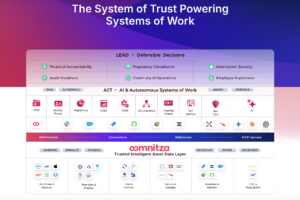 Enterprise platforms, Axonius included, are getting better at telling you what they can see. The harder problem is telling you whether what they see is actually true once you check it against Finance, HR, and Procurement. Oomnitza is built to solve that second problem.
Oomnitza is a modern, enterprise-grade trusted asset intelligence platform that eliminates guesswork from IT operations and delivers asset data you can trust to operate on. It provides IT, Security, HR, and Finance leaders with a single, accurate view of every asset—hardware, software, SaaS, and cloud—by continuously reconciling data from MDM, EDR, IAM, procurement, and HR systems. Instead of juggling spreadsheets or piecing together information from siloed tools, teams gain a single system of record that tracks and governs each asset from purchase through usage to secure disposal. The result? Fewer audit surprises, reduced waste from unused licenses or lost devices, and complete visibility into your technology ecosystem.
What sets Oomnitza apart is how it orchestrates the entire asset lifecycle across all asset types, not just deployed devices.
Traditional ITAM tools rely on manual updates and disconnected workflows, leaving data gaps and operational blind spots. Oomnitza closes those gaps with real-time data synchronization and event-driven lifecycle automation that governs onboarding, offboarding, software renewals, refresh cycles, and more.
Our platform orchestrates compliance with audit-ready chain-of-custody records and integrates seamlessly across your stack with 1,500+ pre-built connectors. Deployed in weeks, not months, Oomnitza helps enterprises achieve over 98% system-of-record accuracy, reduce operational costs, and make faster, smarter decisions across every department.
98%+ system-of-record accuracy. 70% faster audit prep. 45% higher asset recovery.
Oomnitza customer-reported outcomes
Differentiator #1 – End-to-End Lifecycle Automation That CAASM Tools Don’t Deliver
CAASM platforms like Axonius give security teams a correlated, post-deployment view of their environment. What they don’t provide is lifecycle governance—the operational, financial, and cross-functional processes that determine how assets are requested, purchased, deployed, secured, refreshed, recovered, and retired.
Oomnitza fills this Trust Gap with a connected lifecycle automation layer that spans HR, IT, Security, Procurement, and Finance. Instead of relying on manual updates or disconnected tickets across multiple systems, Oomnitza orchestrates the full asset journey from forecast to retirement.
Without a connected lifecycle, organizations run into issues no CAASM tool can solve: misassigned assets, stale system-of-record relationships, weak chain-of-custody, offboarding gaps, unreconciled procurement data, and limited visibility into refresh cycles or total cost of ownership. These are operational and financial problems—not security visibility problems.
A Real-World Example
Say you have a new hire who requests a laptop. In a traditional setup, that single request triggers a chain of disconnected steps: emails to IT, procurement updates, HR tickets, and manual security validation. By the time the employee receives their device, ownership and assignment data may already be outdated across several systems.
With Oomnitza, that workflow is orchestrated from a single platform. A new-hire event in the HR system can trigger purchase requests, coordinate provisioning tasks, update asset ownership, initiate required security validations, and sync the resulting records back to Finance, ITSM, and other systems of record. Each step is automated or routed to the appropriate integrated tools, ensuring that lifecycle governance remains complete and accurate.
| Lifecycle Stage | What Oomnitza Does | Why It Matters |
|---|---|---|
| 1. Forecasting | Aggregates data from finance, procurement, HRIS, and IT systems to give visibility into upcoming headcount, refresh needs, asset age, and historical usage patterns. | Ensures accurate budgeting, prevents over- or under-purchasing, and aligns technology investments with business priorities. |
| 2. Procurement | Creates and routes purchase requests, logs approved orders, and syncs PO and asset data from ERP and procurement platforms. | Establishes chain-of-custody at the point of purchase and ensures every asset is accounted for before it ever enters inventory. |
| 3. Supply Chain & In Transit | Tracks shipment and receiving data from connected systems and maintains visibility as assets move from vendor to warehouse or staging locations. | Reduces blind spots during transit and creates a more complete audit trail of where assets are before they reach IT. |
| 4. Receive, Storage, & Staging | Captures inventory details as assets arrive (serial, model, location, status) and syncs them with IT, finance, or CMDB systems. | Eliminates “ghost” inventory, and keeps incoming assets aligned across multiple systems of record. |
| 5. Provision & Deploy | Coordinates provisioning by triggering actions in identity and MDM tools and keeping assignment and ownership records updated. Updates CMDBs and assigns ownership automatically. | Supports security and compliance from day one, reduces manual setup time, and eliminates onboarding errors. |
| 6. Use & Monitor | Continuously reconciles asset, user, and system-of-record data from connected tools to keep ownership, status, and relationships accurate over time. | This reduces manual clean-up and prevents system-of-record drift across IT, HR, Finance, and Security. |
| 7. Security (Active) | Ingests signals from MDM, EDR, IAM, and other security tools to verify required agents and configurations, and triggers remediation workflows when gaps appear. | This gives teams a clear view of security posture within the asset lifecycle and helps ensure issues are routed and addressed quickly. |
| 8. Maintain, Patch, & Refresh | Tracks warranty and usage data and initiates maintenance or refresh workflows as assets near end of life. | This helps IT stay ahead of aging or out-of-compliance devices and plan refreshes without scrambling or overspending. |
| 9. Decommission / Retirement | Coordinates retirement by updating status, triggering access removal, initiating wipe or deprovisioning where supported, and recording the audit trail. | Prevents data leaks, ensures compliance with retention policies, and readies equipment for next steps. |
| 10. Reposition or Reuse | Identifies redeployment opportunities and automates reassignment workflows for recovered or refurbished assets. | Reduces waste, maximizes asset utilization, and supports sustainability initiatives. |
| 11. Final Depreciation & Closure | Syncs end-of-life details—depreciation, write-off, disposal status—back to finance or ERP systems and closes out the lifecycle record with complete audit documentation. | Ensures IT and financial records stay aligned and that lifecycle reporting remains accurate for audits, budgeting, and compliance. |
Automating the lifecycle process can help in almost every area. Another example to consider: When an employee leaves, Oomnitza triggers a workflow that alerts teams, initiates device recovery, updates ownership, and determines whether hardware should be redeployed or retired, while connected systems handle access removal or device wipes. Customers report up to 70% faster audit prep and a 45% boost in asset recovery during offboarding. That’s the difference between a tool that sees your assets and a platform that governs them.
Differentiator #2 – 1,500+ Turnkey Connectors Enabling Seamless Lifecycle Governance Across IT, HR, Finance, Security, Procurement, and More
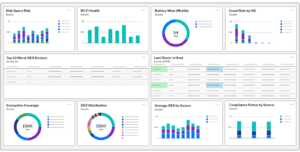
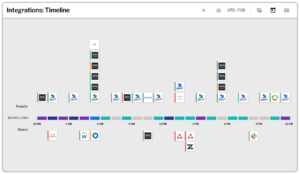
Oomnitza’s 1,500+ pre-built connectors span IT, HR, Finance, Procurement, Identity, Security, Cloud, and collaboration systems. This breadth allows Oomnitza to reconcile asset, user, and financial data across all systems of record and orchestrate operational workflows that extend beyond discovery and compliance use cases. They unify data across IT, HR, Finance, Procurement, Security, Cloud Ops, and business systems, enabling true cross-functional automation and accurate, continuously reconciled asset records.
Axonius integrates broadly across security and infrastructure tools to deliver cyber asset intelligence. While those integrations give teams a consolidated, post-deployment view of assets and security posture, they don’t provide the cross-functional data alignment required to govern the full asset lifecycle.
Security-first platforms often connect to a range of systems—including HR tools—to support visibility, risk assessment, and policy enforcement. But the scope of these integrations typically centers on security-driven outcomes, not on enabling end-to-end operational, financial, and lifecycle processes across the business.
Oomnitza integrations can connect:
- Financial & procurement systems (ERP, P2P, AP/AR): Match purchases to inventory, update depreciation, and forecast budgets
- HR platforms (Workday, BambooHR, Okta): Maintain employee/asset relationships and automate onboarding/offboarding with financial and operational updates
- Business & collaboration tools (Slack, Teams, Salesforce): Trigger multi-team workflows and approvals
- Cloud infrastructure (AWS, Azure, GCP): Integrate cloud utilization and cost signals into lifecycle automation
- Security & endpoint tools (Jamf, Intune, EDR): Enforce configuration compliance and remediate issues automatically
Because Oomnitza connects to all the systems that define the lifecycle—not just those that detect deployed assets—enterprises can:
- Reconcile data across HR, IT, Finance, Procurement, and Security
- Maintain accurate asset and user relationships
- Ensure cost center and financial records stay current
- Automate onboarding, offboarding, recovery, refresh, and compliance workflows
- Reduce manual reconciliation across teams
This integration fabric is what makes lifecycle automation possible at scale—and it’s a capability CAASM platforms, including Axonius, are not designed to deliver.
This broad and deep integration fabric allows Oomnitza to orchestrate complete lifecycle events. For example, when HR offboards an employee, Oomnitza updates the user status, initiates device recovery workflows, updates cost center data, and produces audit-ready documentation—while integrated systems handle access removal or device wipes.
Differentiator #3 – Low-Code/No-Code Workflow Automation for Cross-Functional Lifecycle Processes
In many organizations, routine processes like onboarding still rely on emails, tickets, and manual handoffs. HR submits a request, IT configures devices, Security assigns policies, Facilities grants access, and Finance updates asset records. If even one step breaks, the new hire’s first day suffers—and the same inefficiencies repeat across the entire technology lifecycle.
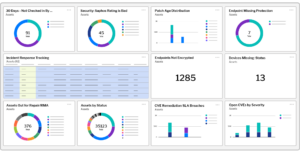
Oomnitza eliminates these issues with a purpose-built workflow engine that automates complex, multi-step processes across teams—with little to no coding required. Workflows can trigger from data changes, time-based schedules, or external events, and they integrate across IT, HR, Finance, Security, and Operations.
Examples:
Laptop Lifecycle Automation
When a device nears end-of-life, Oomnitza can create a replacement requisition, route approvals, trigger procurement, and coordinate onboarding tasks automatically.
SaaS License Optimization
If a license shows low or no usage, Oomnitza can notify the user, trigger reclamation workflows in connected systems, and update utilization and savings data for Finance.
Unlike security-only platforms that focus workflows on posture detections, Oomnitza’s low-code/no-code engine is built for operational and lifecycle processes. The platform supports conditional logic, parallel processing, human approvals, API calls, and dynamic lookups. Pre-built templates for onboarding, offboarding, compliance, refresh cycles, and license optimization accelerate setup while remaining fully customizable.
Organizations that once handled most lifecycle processes manually now see:
- A 40% improvement in SaaS and cloud spend forecasting
- Fewer errors and missed tasks
- Significant reductions in audit preparation time
- Adaptive workflows that adjust as the business evolves
With Oomnitza, workflows don’t just enforce security. They orchestrate every operational step, reducing risk, saving time, and turning IT into a proactive, strategic enabler.
Differentiator #4 – Where Security Platforms Stop at Visibility, Oomnitza Delivers Full Financial Insight and Cost Optimization Across the Lifecycle
Security-focused platforms show where your assets are—but rarely what they cost. Without financial context, IT and Finance leaders struggle to optimize spend, validate ROI, or determine whether assets should be kept, refreshed, or retired.
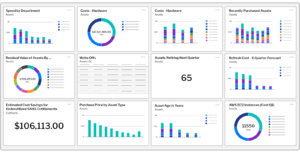
Oomnitza embeds financial intelligence into every stage of asset management. It tracks each asset’s lifecycle—from purchase price and depreciation to licensing, maintenance, and cloud utilization—creating a unified record that directly connects IT operations with Procurement, Budgeting, and Finance.
Beyond basic cost tracking, Oomnitza surfaces savings signals across SaaS, hardware, and cloud: unused licenses, redundant applications, underutilized cloud instances, and devices nearing refresh or retirement. This asset intelligence helps teams plan hardware replacement cycles, model budgets, and schedule purchases for maximum financial efficiency.
How Oomnitza Turns Asset Management into a Strategic Value Driver
Scenario: Your company discovers 200 unused SaaS licenses and a collection of underutilized cloud resources. Oomnitza brings these issues to the surface by combining usage, ownership, and configuration data from your SaaS and cloud systems. From there, it can notify the right owners, kick off reclamation or deprovisioning workflows, and update lifecycle and cost-center details so Finance and Procurement can clearly see the savings opportunity.
Outcome: Your CFO gains precise clarity on ROI across your technology stack. Procurement negotiates more effectively with vendors. IT and Finance reduce waste while maintaining compliance. Customers report up to 40% improvement in forecasting accuracy for SaaS and cloud spend and uncover significant savings through license reclamation and asset recovery.
By aligning operational and financial intelligence, Oomnitza transforms asset management from a cost center into a strategic contributor–proof that reconciled data, not just discovered data, is what makes automation and AI-assisted decisions defensible.
2. ServiceNow Hardware Asset Management
ServiceNow IT Asset Management (ITAM) is a natural choice for enterprises already using the ITSM platform. It integrates with ticketing, change management, and service catalog workflows, enabling teams to track laptops, servers, cloud resources, and SaaS subscriptions while automating key processes such as onboarding, offboarding, procurement, and compliance.
Key features include:
- ITSM integration: Connects asset management with incident, problem, and change workflows
- CMDB: Tracks asset relationships and dependencies
- Service Catalog: Self-service portal for hardware and software requests
- Contract Management: Tracks vendor contracts, warranties, and maintenance
- Tracking: Barcode, GPS, BLE, and RFID support for distributed assets
Limitations
ServiceNow’s CMDB often requires extensive configuration and manual updates, which can lead to stale or incomplete data. Implementations typically take longer and are more resource-intensive due to the platform’s complexity and dependency on specialized expertise.
Oomnitza addresses these gaps with an object-based architecture that continuously syncs information across MDM, HR, procurement, and security systems—maintaining 98%+ system-of-record accuracy. Integrations are faster, lifecycle workflows are easier to build, and teams benefit from a unified asset model that drives real-time decisions across IT, Finance, HR, and Security.
3. Ivanti Neurons for ITAM
Ivanti Neurons for ITAM provides visibility into hardware, software, and SaaS assets throughout the lifecycle and integrates closely with the Ivanti ITSM platform. Features such as vendor scorecards, contract tracking, mobile device management, and barcode scanning help connect assets to incidents, requests, and changes. No-code workflows and modular deployment options (cloud, on-prem, hybrid) offer flexibility for IT teams.
Key features include:
- Unified Endpoint Management: Combines endpoint security and asset management via agent-based discovery
- Software Asset Management: Tracks licenses, ensures compliance, optimizes usage
- Patch Management: Built-in vulnerability and patch capabilities
- Discovery: Agent-based and agentless discovery for broad coverage
Limitations
Asset lifecycle tracking in Ivanti can feel secondary to service management, with dependencies on ticketing workflows and manual updates between systems. For organizations already using Ivanti ITSM, extending into ITAM can be practical—but for teams requiring continuous cross-system reconciliation across HR, Finance, Procurement, and Security, with automated lifecycle governance and high data accuracy, Oomnitza offers a more complete and unified solution.
4. Flexera One IT Asset Management
Flexera One is a strong platform for enterprises needing deep visibility into software, hardware, SaaS, and cloud assets. Its strengths lie in optimizing spend, managing complex licenses, and ensuring audit readiness. AI-driven normalization and a large library of software use rights help teams resolve compliance challenges and uncover cost savings.
Key features include:
- Software License Optimization: Manages complex licensing scenarios
- Cloud Cost Management: Visibility and optimization across multi-cloud environments
- Vendor Contract Management: Improves vendor relationships and renewal timing
- SAM Automation: Automated discovery, license tracking, and compliance reporting
Limitations
Flexera excels in environments with complex licensing and hybrid IT, but relies heavily on its own ecosystem—limiting integration flexibility. Its focus centers more on inventory, normalization, and compliance than on end-to-end lifecycle governance. Organizations seeking automated cross-functional workflows or fully unified lifecycle visibility may encounter gaps. For enterprises prioritizing faster deployment, broader integrations, and cross-domain lifecycle intelligence and orchestration, Oomnitza provides a more comprehensive solution.
Go Beyond Security and Turn Asset Management into a Strategic Advantage
Evaluating enterprise technology asset management platforms is no longer just about security visibility. It’s about whether your enterprise can trust the data every other system, workflow, and AI agent is about to act on.
Security-focused tools like Axonius excel at discovering assets and flagging configuration issues, but they leave operational and financial gaps across procurement, lifecycle automation, and ongoing cost optimization. Teams often find themselves juggling disconnected systems, manual workflows, and stale or inconsistent asset records.
ITSM platforms like ServiceNow or Ivanti add robust ticketing, workflow, and service management capabilities, yet they often struggle with real-time accuracy, deep cross-system reconciliation, or fully automated lifecycle governance. Flexera offers powerful license and compliance insights, but lacks the end-to-end lifecycle automation and cross-functional orchestration modern enterprises require.
Oomnitza closes these operational and financial gaps with a unified platform that brings every part of the asset lifecycle together:
- End-to-End Lifecycle Automation: Governing assets from request to retirement across IT, HR, Security, Finance, and Procurement
- 1,500+ Lifecycle-Driven Connectors: Unifying data across your entire technology ecosystem by keeping systems of record in sync and enabling accurate, cross-functional workflows
- No-Code Workflow Engine: Automating complex, multi-step processes across departments without engineering support or costly consultants, making lifecycle governance scalable and repeatable
- Embedded Financial Intelligence: Turning asset intelligence into actionable cost optimization and ROI insights
Organizations using Oomnitza achieve 98%+ aligned system-of-record accuracy, reduce audit preparation time by 70%, increase asset recovery by 45%, and improve SaaS/cloud spend forecasting by 40%. When operational, security, and financial data stay in sync, teams stop fighting their systems and start making decisions with confidence.
When Your Enterprise Needs a Single Source of Truth for Every Asset
When your organization needs reliable asset intelligence, automated lifecycle governance, and actionable financial insights in a single platform, Oomnitza gives you what Axonius alone can’t: a system of trust that every other System of Work—ServiceNow, Salesforce, Slack, your CMDB, your AI agents—can act on with confidence.
Learn how Oomnitza helps enterprises turn asset intelligence into lower costs, stronger governance, faster audits, and smarter decisions across the business.
Frequently Asked Questions About Axonius Alternatives
1. Is Axonius a good replacement for a traditional ITAM platform?
Not on its own. Axonius is a CAASM (cyber asset attack surface management) tool, built to correlate what’s already deployed and flag security gaps. It doesn’t manage procurement, financial reconciliation, or the parts of the asset lifecycle that happen before a device is on the network or after it’s retired. Most teams that outgrow Axonius pair it with — or replace it with — a platform built for full lifecycle governance, like Oomnitza.
2. What’s the difference between CAASM and IT asset management (ITAM)?
CAASM tools discover and correlate assets that are already connected to your network or cloud environment, mainly for security visibility. ITAM platforms govern the entire asset lifecycle — forecasting, procurement, deployment, financial tracking, refresh, and retirement — across IT, HR, Finance, and Security, not just the security-relevant slice.
3. How long does it take to implement Oomnitza compared to other ITAM platforms?
Oomnitza customers typically deploy in weeks, not months, due to its 1,500+ pre-built connectors and object-based architecture. ITSM-anchored platforms like ServiceNow and Ivanti generally take longer because lifecycle workflows have to be configured around existing ticketing structures.
4. Does switching from Axonius mean losing security visibility?
No. Oomnitza doesn’t replace security tooling — it ingests signals from MDM, EDR, IAM, and other security systems (including Axonius, where customers keep it) and reconciles them against HR, Finance, and Procurement data. You keep the security visibility and add the lifecycle governance and financial accountability Axonius wasn’t built to provide.
5. What results do companies see after switching to a lifecycle-focused ITAM platform?
Oomnitza customers report 98%+ system-of-record accuracy, 70% faster audit preparation, a 45% increase in asset recovery during offboarding, and a 40% improvement in SaaS and cloud spend forecasting accuracy.